
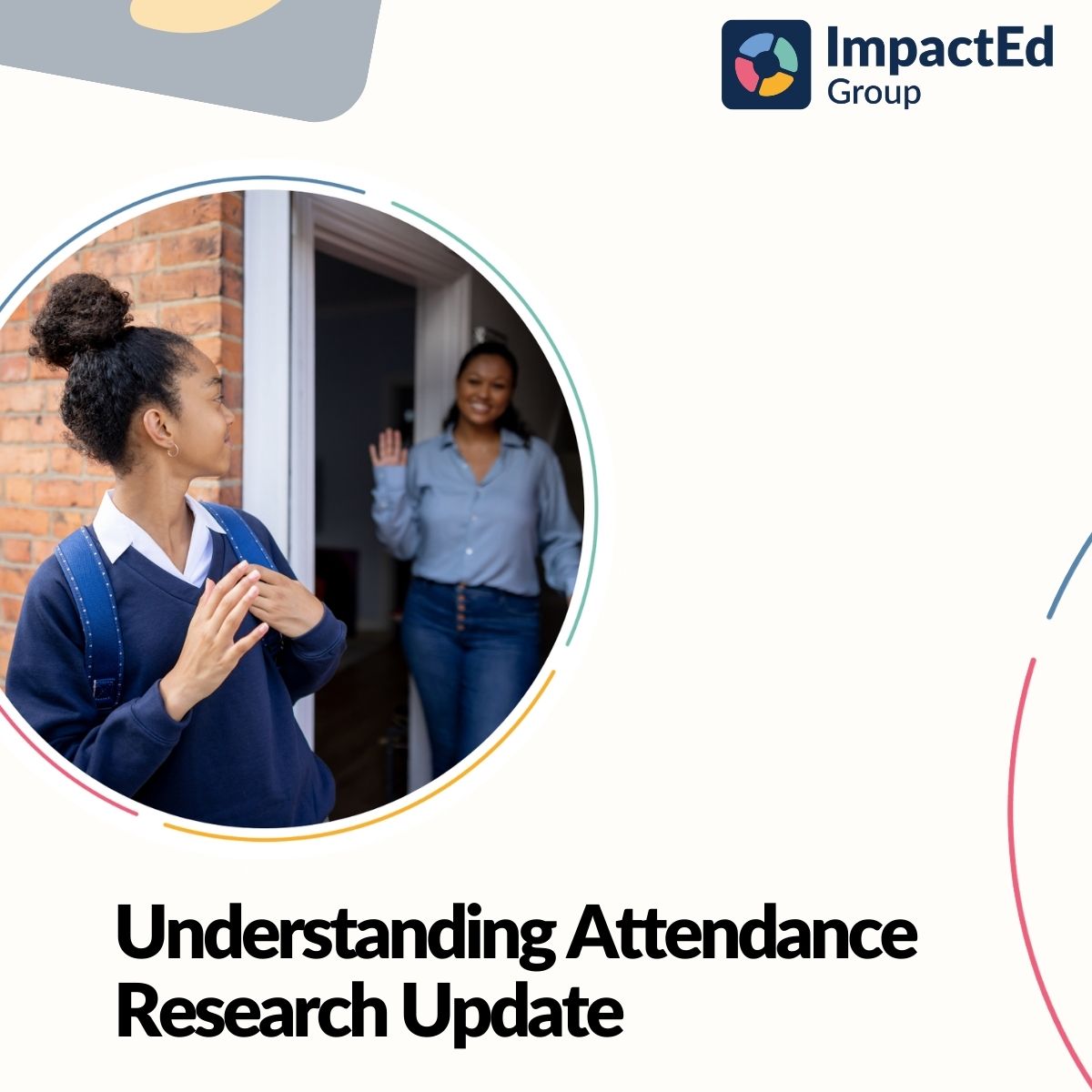

March 2026 Insights Update: Understanding Attendance

Read the full report:
March 2026 Insights Update: Understanding Attendance
Our latest Insight Update combines attendance data with demographic data and pupil insights into key social and emotional domains
Improving attendance continues to be one of the most pressing challenges facing schools across thecountry. Through Understanding Attendance, we aim to equip education leaders with the evidence they need to take targeted, effective action. In this latest Insights Update, we analysed data from over 46,000 secondary pupils across Years 7–11. This analysis combined attendance data with demographic data and pupil-reported survey insights into key social and emotional domains.
Overall, the findings show clear patterns and insights that highlight where targeted support could have the biggest impact.

Key findings

Pupil Premium and Special Educational Needs and Disability (SEND)
The most at risk demographic groups in terms of lower attendance are pupils eligible for Pupil Premium and pupils with Special Educational Needs and Disability (SEND)

Year 7 to Year 8 transition
There is a dip at Key Stage 3, with, attendance dropping noticeably between Year 7 and Year 8.

The importance of relationships
The role of the family and home environment is the strongest predictor of attendance overall. Peer relationships are positively correlated with higher attendance for pupils eligible for Pupil Premium and pupils with SEND.
Latest reports
Latest research, campaigns and resources from the team at ImpactEd Group


.png)

Get in touch
To speak to one of our senior team about how we could support your work, please get in touch
