

Culture Shift: How Harris Science Academy East London Boosted Attendance and Belonging
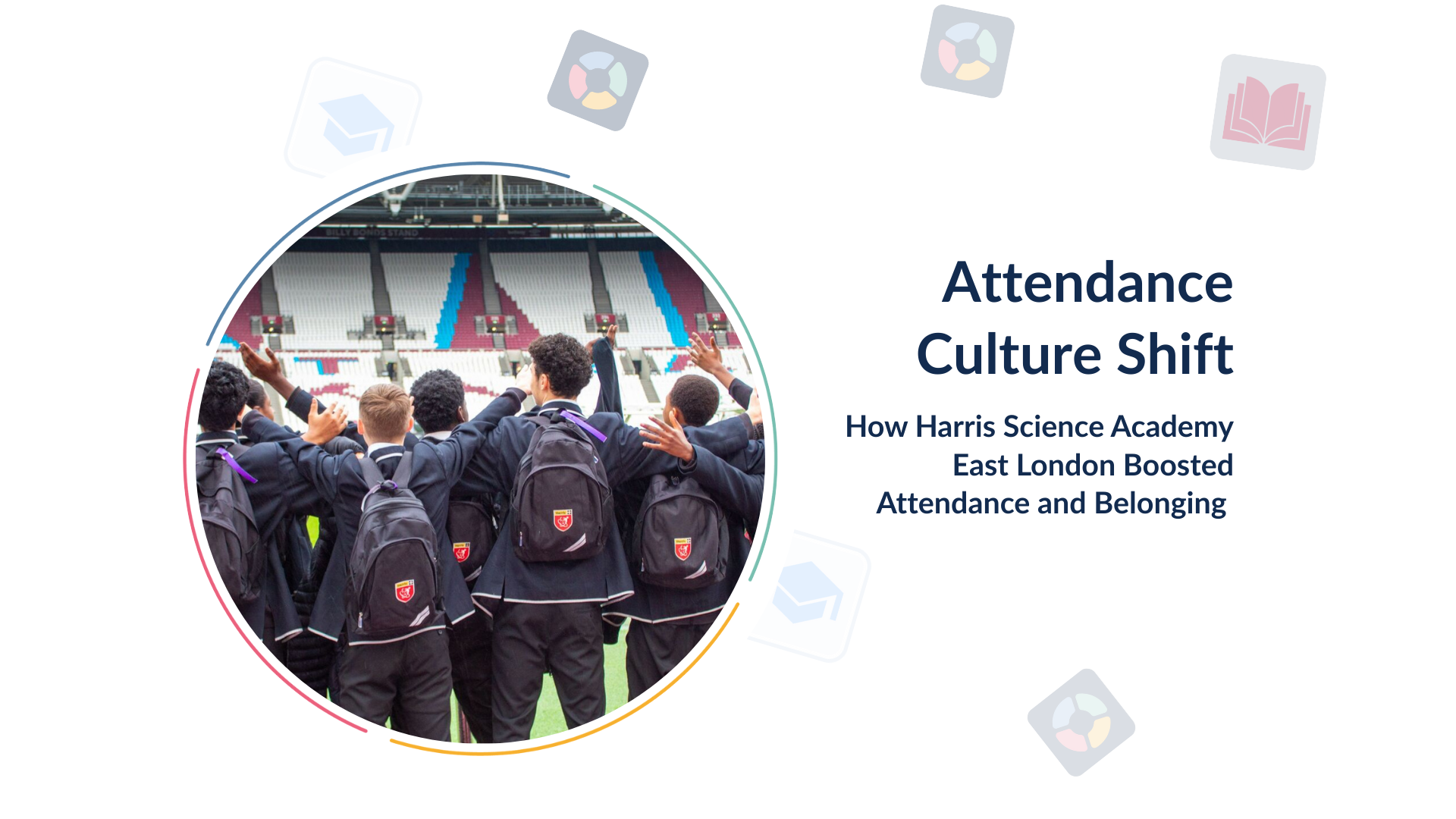

Harris Science Academy East London was one of 30 Harris Federation schools that took part in ImpactEd’s Understanding Attendance national research project. The school made stand out progress with their attendance in 2024-25, as well as orchestrating a huge cultural shift to increase pupils’ sense of belonging.
Located in Newham and bordering Tower Hamlets, the East London school straddles two of England’s most deprived boroughs. The school serves a vibrant, diverse community where over 30% of pupils are of Asian heritage (mainly Bengali descent), 20-30% are white British, and a significant proportion speak English as an additional language. When the current leadership team arrived in September 2022, they inherited complex challenges. Many families faced housing in security, academic attainment was low and there was a diluted sense of belonging among both pupils and parents, with education itself undervalued in parts of the community.
Since then, staff at Harris Science Academy East London have been progressively improving attainment and attendance across the last 3 years. As part of the Understanding Attendance 2024-2025 cohort, the school initially scored below the national average when measuring sense of school membership. Just one year later, the school had risen to 8% above national average for secondary schools in their cohort, the biggest change seen in any school across the same timeframe.
A culture shift
Perhaps most importantly, the leadership team identified that a culture shift was needed to make a difference to both pupils and their families. Vice Principal and Designated Safeguarding Lead, Tom Christopher, shares some of the actionable steps that the leadership team implemented during that time to improve pupil sense of belonging and consequently improve attendance, including: a key focus on supporting female pupils; creating effective reward systems; disrupting known attendance patterns and setting ambitious standards with attendance targets.
Creating safe spaces for female pupils
When surveyed, female pupils at the school had the lowest sense of belonging and scored notably lower than boys on the measure for ‘sense of safety’. Tom and the attendance team began a rigorous intervention to change this reality for pupils. One area of focus was reducing period related barriers to attendance. They introduced a designated female only space every lunch time, to give girls a space to relax and raise concerns. Senior female members of staff and various external organisations then held workshops to address these concerns. The school also established two working groups of female pupils who gather feedback from their peers and deliver it directly to staff.
Tom reports this has generated an overwhelmingly positive response, with girls feeling heard and valued. In their initial Understanding Attendance survey, female pupils scored an average of 2.94 out of 5 for sense of school membership. Following the targeted interventions, the same cohort of female pupils scored notably higher, increasing the score to 3.4 out of 5, an 11.5% pts increase.
Redesigning recognition and reward
The school also tackled their existing recognition system in two ways. The team introduced the Excellence Programme, a tiered system recognising pupils’ commitment to school through bronze, silver, and gold badges. To achieve a bronze badge, pupils must attend school every day across a two-week period. Sustained attendance over four weeks earns a silver badge, while pupils aiming for gold must maintain full attendance over six weeks, with only one day’s absence permitted.
For pupils that have not yet reached bronze, the programme also rewards positive behaviours such as completing homework, good conduct, and punctuality, fostering a holistic sense of responsibility and belonging. Tom proudly reflects that six weeks into this school year, 78% of students have already achieved the bronze badge – a positive indicator of early engagement.
The school also made a seemingly simple change which hasmade a noticeable impact on school culture: moving all celebratory events,prize-giving, awards and birthday celebrations from the afternoon to themorning. Tom reports that the shift has changed the morning atmosphere, startingthe day with reinforcing a culture of belonging and celebration, which has encouragingboth better attendance and punctuality.
Disrupting negative attendance patterns
The attendance team also identified predictable patterns in behaviour: for example, attendance consistently dropped off on Fridays and at the end of each term, when pupils and families took a more relaxed view of school.
The team restructured Fridays to make them more appealing for pupils. The school proactively schedules enjoyable activities and moved all rewards/trips to only Fridays, giving pupils something to look forward to. Additionally, the school day finishes 10 minutes earlier on Fridays - a small change that Tom reports, has made a difference in pupils’ mindsets. The team has also shifted to organising all major school events and trips at the end of term, to incentivise end of term attendance.
Setting ambitious standards
Another key change was rather than accepting the local authority's persistent absence threshold of 90%, the attendance team set their own ‘HSAEL persistence absent rate’ benchmark at 94%. Tom explains that ‘once a child drops below 90%, it's very difficult to shift. To capture them early, we use 94% as our threshold where intervention comes in rather than waiting until90%.’ Early intervention begins with form tutors calling home for a more personal touch, before the attendance team step in to support.
The school is seeing positive results. LA measured persistent absence sits at 15% at the end of half term 1, down from 18.3% at the same point the previous year.
Reflections
The team at Harris Science Academy East London are using a coordinated approach to impact their attendance and continually improve pupil sense of belonging. By listening closely to their pupils, redesigning how they celebrate success, actively disrupting negative patterns, and setting ambitious expectations early, the school created the conditions for pupils to want to be there.
Tom and his team anecdotally report positive shifts in the feeling of belonging across the school community, and the data supports this. In addition to the increases in female sense of school membership, the overall scores increased by 7.9%.
We asked Tom to reflect on what has shifted culture the most– “you can do all this attendance work, but if the students don't enjoy coming to school, don't have a sense of belonging, don't feel supported, don't feel safe, then none of that matters. Yes, our school is academic, but we lean into warmth, joy and fun.”
Join our national cohort
This term 32 Harris schools are continuing the Understanding Attendance project into 2025-26 using our latest question set, to further deepen their understanding of the behaviour, social and emotional drivers of attendance within their school and trust setting.
If you are interested in joining our upcoming Spring cohort of the Understanding Attendance to support your school or Trust to understand the factors impacting attendance in your school, and ultimately improve attendance, get in touch with us by emailing hello@impactedgroup.uk
Get in touch
To speak to one of our senior team about how we could support your work, please get in touch
